
Categories such as lifestyle, food and electronics accounted for over 1,350 sellers across the country last year.

Sebi had, in February, dropped allegations of fraudulent and unfair trade practices against NSE's former heads Ravi Narain and Chitra Ramakrishna in the co-lo case.

Capital dumping is being used by foreign e-commerce firms to subsidise and engage in predatory pricing, oil-to-telecom conglomerate Reliance Industries (RIL) has told the Associated Chambers of Commerce and Industry of India (Assocham) in an internal document. The document alleges that this is leading to massive unemployment and financial distress among small merchants and kirana stores. It consists of various recommendations and proposed changes that deal with Press Note 2 of 2018 (PN 2), which RIL wanted Assocham to present to the government, according to sources.

Many industry executives have said the draft e-commerce policy is being perceived as nationalistic but not overly protectionist and it is providing preference to Indian players against foreign companies. This might have an impact on investment by large players such as Walmart and Amazon in the country, said the executives. They said e-commerce was a very small portion of the retail industry and at a nascent stage and did not require heavy hammer regulations. Though the policy talks about being equally applicable to foreign and domestic players, it mentions that foreign direct investment (FDI) takes precedence over the e-commerce policy in any area of overlap.

There is a perception getting built inside the government that big technology companies -- a common term used for firms like Facebook, Google, Twitter, Amazon and the like - are becoming very powerful and present multiple threats to entire nations and their citizens today. The digital ecosystem is replete with CSAM (child sexual abuse material), fake news, drug trade, radicalisation, trolling among other social vices. Given the network effect that these platforms have, it is important to ensure that these platforms are not misused.

Last November, a lawyer for Future Retail Limited (FRL) told Delhi high court that Amazon is interfering with its lawful business and thousands may lose their jobs and FRL may go bankrupt. Senior advocate Harish Salve, who appeared for FRL, likened Amazon to East India Company. Senior advocate Gopal Subramanium, who represented Amazon, told the Future counsel to keep the "East India Company" rhetoric aside, as Amazon has invested $6.5 billion all over India and created 900,000 jobs. This drama played out in the case in which Amazon has challenged Future's $3.4-billion deal with Reliance, alleging the retailer's deal breached an agreement with the American e-commerce firm.

Indian industry snubbed Google Play's decision to cut by half its commission for developers when they make $1 million in annual revenue for in-app purchases, saying the US tech giant may continue its "abrasive & monopolistic abuse" as it owns the Android system. Google Play said Tuesday that beginning July 1 it would slash its 30 per cent billing fee to 15 per cent for developers globally when they make the first $1 million of their annual revenue.

The government has brought in changes to the investment pattern for non-government provident funds, and superannuation and gratuity funds, enabling them to invest up to 5 per cent in the units of Category I and Category II alternative investment funds (AIFs), subject to some caveats. The development is part of the central government's strategy to channelise domestic savings and improve their returns to attract more investment in the said sectors. At present, these funds typically invest a minimum 45 per cent in government securities, besides new instruments, such as exchange-traded funds and real estate investment funds, while a portion in equity-related instruments.

Government-controlled oil-marketing companies (OMCs) have held back petrol and diesel price revisions for a week and are expected to continue doing so, ostensibly owing to political reasons. It appears that the Centre has informally conveyed to the three major OMCs to not revise fuel prices for the time being, two people in the government said. This informal directive follows the talks between the Centre and states on cutting taxes and bringing the auto fuels under the good service tax regime not fetching the desired results, so far.

Sources said about hundreds of companies, including Facebook and Amazon, could seek tax refund because they import software for sale in India.

The Centre is likely to privatise profit-making enterprises, reversing its previous position of first closing or merging loss-making state-run units. The NITI Aayog, which is in the process of selecting public sector units for privatisation, is likely to put out its first list, focusing on companies in non-strategic sectors, along with those that have got Cabinet approval for stake sale, or are in final stage of due diligence. "The shortlisted firms will be put out in three-four tranches, with the first list comprising non-strategic ones, followed by strategic sectors with a focus on privatisation and not divestment," said a senior government official privy to the plan. He said the first report was expected in early April. The think tank approach is in sync with the government's new strategies on privatisation and asset monetisation.

The Securities and Exchange Board of India's (Sebi's) technical advisory committee has been mandated to probe the trading halt at National Stock Exchange (NSE) and fix accountability. The committee after a detailed examination would send its findings and recommendations to whole-time member Madbhi Puri Buch, to decide the future course of action, said two people in the know. The panel, which is currently chaired by Ashok Jhunjhunwala of IIT Madras, is learnt to have sought an explanation over two key issues from NSE: One on the effectiveness of interoperability as it was unable to migrate the trading positions; the other on laxity in switching it to the disaster recovery site.

E-commerce firms and sellers including Amazon and eBay have made recommendations to the government for a differentiated policy framework for e-commerce in the revised Foreign Trade Policy (FTP) which is expected to come into effect from April 1, 2021. This is because the existing policies on exports have catered largely to traditional, offline and business-to-business exports. Suggestions have been made to the government that through the FTP, it is important to create a conducive policy framework for e-commerce exports that lowers the entry barrier for small businesses to start exporting, according to the industry sources.
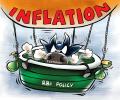
'While intensification of fuel prices and broad-based domestic cost pass-through pressures is a downside risk, core inflation is expected to strengthen further as demand recovers to pre-Covid levels,' the ministry said on Friday.

Despite Nirav Modi win, in the last five years, India managed to bring only about 20 fugitive offenders.

The ED case follows the police complaint for alleged criminal conspiracy and defrauding investors.

Apart from air travel, Flipkart would also be able to offer train bookings through Cleartrip.

However, that could only be for sectors where 100 per cent FDI is allowed under the automatic route and pose no risk to national security.

As Indians start travelling in the new normal, strong recovery in smaller towns underscores success for ride-hailing giant's 'India to Bharat' strategy, which offers new products in regional markets.

$47.6 bn capital invested across 921 deals in India in 2020, despite pandemic.
 © 2026 Rediff.com - Investor Information - Advertise with us - Disclaimer - Privacy Policy - Sitemap - Feedback - About us - Terms of use - Grievances